A reliable clinical solutions provider, Medi Linx Laboratory specializes in Hospital Laboratory Management (HLM), which grants hospitals and clinics direct...

PHP 300.00
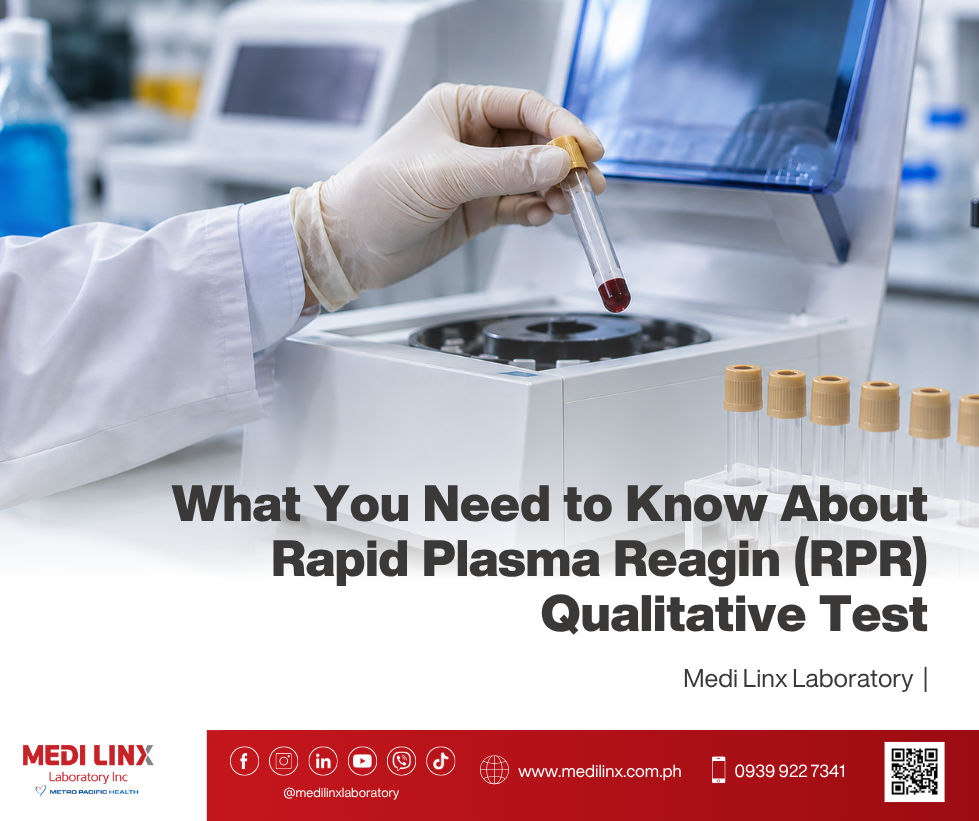
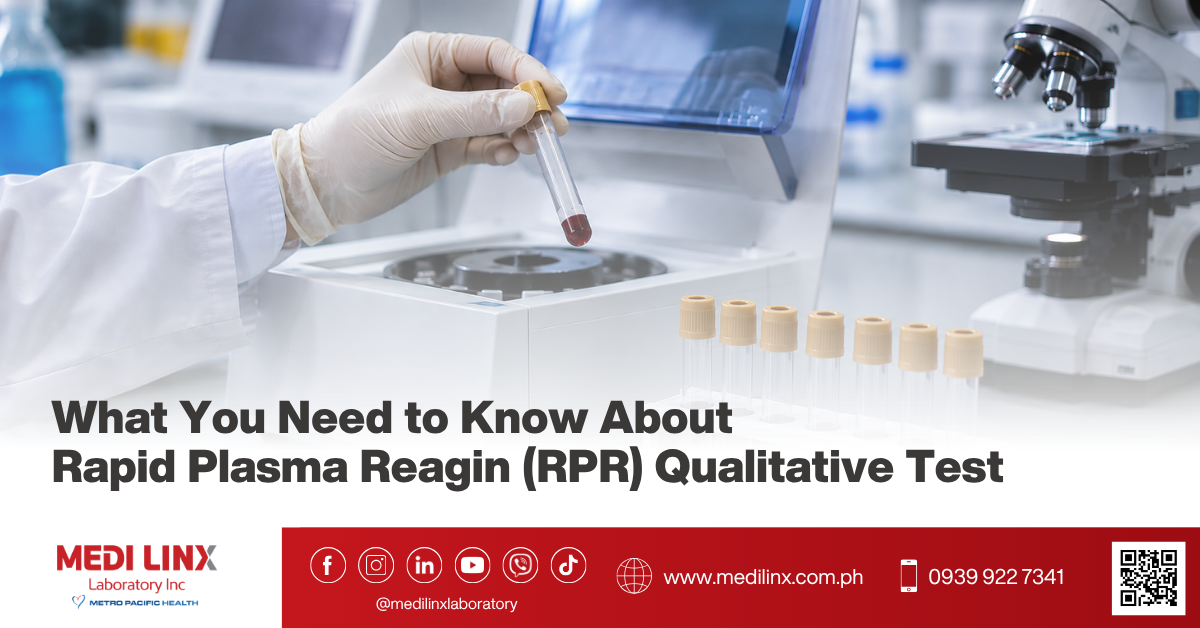
The Rapid Plasma Reagin (RPR) Test is a blood test used to screen for syphilis, a sexually transmitted infection caused by the bacterium Treponema pallidum.
The test detects antibodies called reagin antibodies that may be produced by the body in response to a syphilis infection. It is commonly used as an initial screening test and may be followed by additional confirmatory testing if the result is reactive.
Early detection of syphilis is important because the infection can progress through several stages and may lead to serious complications affecting the heart, brain, nerves, and other organs if left untreated.
An RPR Test may be recommended for individuals who:
Your healthcare provider may recommend testing even if you have no symptoms, as syphilis can remain silent for long periods.
The RPR Test requires a simple blood sample. During the procedure:
The test typically takes only a few minutes to perform, and most patients can resume normal activities immediately afterward.
Yes. Syphilis screening is an important part of prenatal care.
A pregnant woman with untreated syphilis can pass the infection to her baby during pregnancy or childbirth. This may lead to serious complications, including miscarriage, stillbirth, premature birth, or congenital syphilis.
Early testing and treatment can significantly reduce these risks and help protect both mother and baby. For this reason, syphilis screening is routinely recommended during pregnancy.
Yes. Syphilis can be effectively treated, particularly when diagnosed early.
Treatment usually involves antibiotics prescribed by a healthcare provider. Early treatment can prevent the infection from progressing and reduce the risk of long-term complications.
If your test result is reactive, your healthcare provider may request additional confirmatory tests and recommend appropriate treatment based on your clinical condition. Follow-up testing may also be performed to monitor your response to treatment and ensure the infection has been adequately managed.
Prompt diagnosis and treatment are essential for protecting your health and preventing transmission to others.
Keeping your health in check becomes more manageable when infections are discovered at an early stage. Syphilis, for instance, can be picked up at an early stage using the Rapid Plasma Reagin (RPR) Qualitative test. Should you require laboratory services which you can count on, consider reaching out to Medi Linx, a send out lab in Quezon City.
We provide precise, punctual, and highly professional diagnostic services. Improve your health by making an informed decision to get lab tests that you can trust.

A reliable clinical solutions provider, Medi Linx Laboratory specializes in Hospital Laboratory Management (HLM), which grants hospitals and clinics direct...

Hospitals and clinics are given access to QUALITY laboratory services that are unavailable to them through our Send-Out Laboratory Service. Clinical Chemistry...

Specimen Transport Support Service is Medi Linx’s pick-up and transport of laboratory specimen where our partners are guaranteed with the highest quality and...
Contact Us!
"*" indicates required fields

At MEDI LINX LABORATORY INC., we are committed to safeguarding the privacy and security of your personal and health-related information. This data privacy statement outlines how we collect, use, disclose, and protect your data to ensure compliance with applicable laws and regulations, including but not limited to Republic Act No. 10173, its Implementing Rules and Regulations, and the issuance/s set forth by the National Privacy Commission (NPC).
Click here to read the Data Privacy Statement in full.