A reliable clinical solutions provider, Medi Linx Laboratory specializes in Hospital Laboratory Management (HLM), which grants hospitals and clinics direct...

PHP 520.00
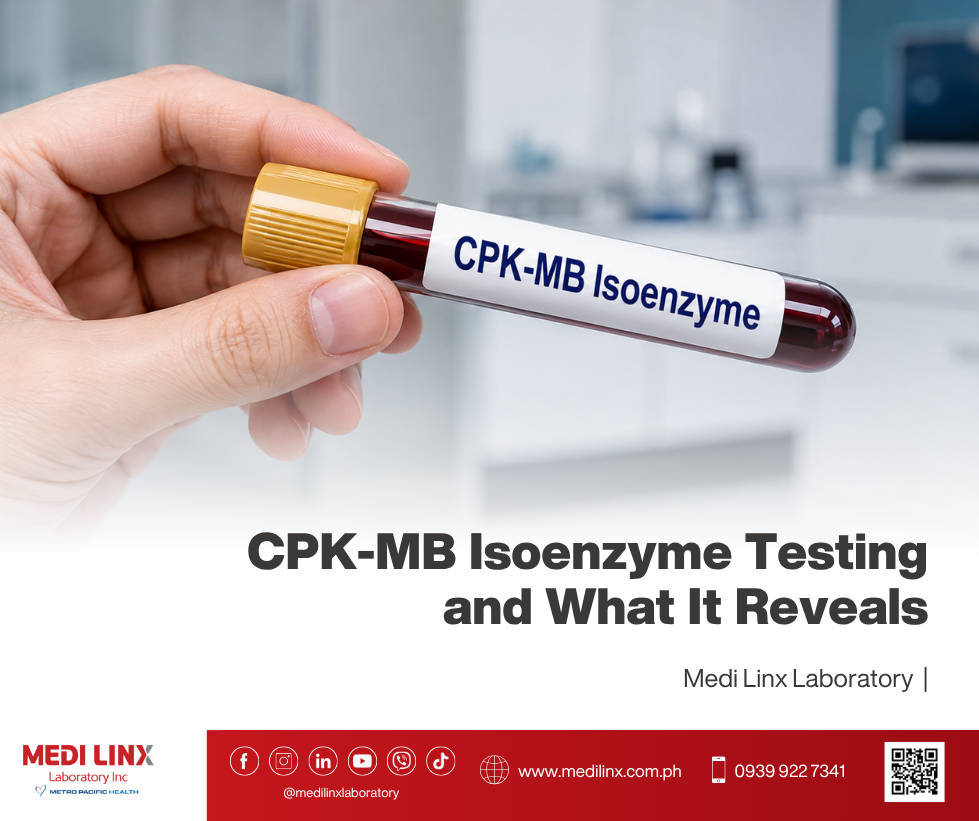
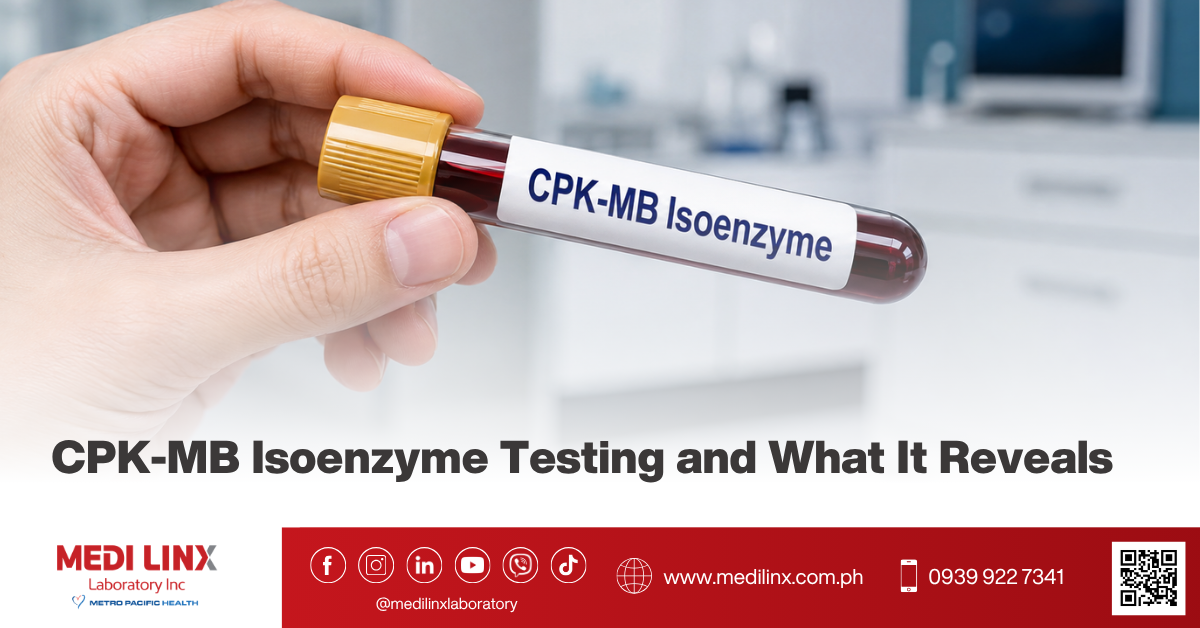
CPK-MB isoenzyme testing measures the CK-MB isoenzyme, a form of creatine kinase found predominantly in heart muscle but also present in small amounts in skeletal muscle. This type of test can be very helpful for doctors in assessing possible myocardial injury when interpreted together with symptoms, medical history, ECG findings, and other cardiac biomarkers.
CPK-MB, or CK-MB, is a form of the creatine kinase enzyme found predominantly in cardiac muscle but can also be present in skeletal muscle. When muscle cells are damaged, CK-MB can be released into the bloodstream.
CK-MB testing is typically one of many diagnostic tools used by the physician during the cardiac assessment stage. If you are experiencing symptoms consistent with possible heart disease and/or there are clinical findings indicating heart involvement, the doctor might want to do some CK-MB testing.
Testing may be considered when a clinician is looking for signs of myocardial damage and the situation is appropriate where periodic cardiac marker testing is helpful. Interpretation of test results should rely on findings from a physical exam and other tests as well.
Preventive health screening may be discussed with a healthcare provider when one or more of the following apply:
Your healthcare provider can advise on the right tests by taking into account your symptoms, risk factors, medications, and earlier test results.
What is the CPK-MB isoenzyme test?
The CK-MB test measures the amount of CK-MB isoenzyme in a blood sample. An elevated CK-MB level may indicate myocardial injury, but it is not specific to heart muscle injury and should be interpreted with other clinical findings and cardiac biomarkers.
Is CPK-MB still being used to identify heart attacks?
In most cases, CK-MB is no longer used as the main method to identify acute myocardial infarction since a new, higher-sensitivity cardiac troponin test has proven to be more accurate because of its ability to detect heart muscle-specific injury. Even so, CK-MB may still have a role in selected clinical situations, such as certain cases of suspected reinfarction, depending on the clinical setting and available testing.
What screening tests for the early detection of kidney disease are available?
Standard kidney screening tests include measuring blood creatinine plus calculated glomerular filtration rate (eGFR) and urine albumin-to-creatinine ratio (UACR). You should consult your medical doctor to find out which ones are best for you, taking into account risk factors related to your health.
Finding out about disease early is a very critical factor that allows doctors to make medical decisions in a timely manner, be it the determination of a possible heart injury or following up on a patient’s kidney or heart condition over time. Essentially, the whole idea is not only to get the right diagnostic tests but also to be able to correctly explain your findings. For clinics and hospitals of all kinds, diagnostic labs, and health-related businesses, Medi Linx Send-Out Lab Services can help provide access to specialized laboratory testing that complements your facility’s in-house capabilities. Contact us now to diversify your laboratory testing offerings and make patient care decisions with accurate information.

A reliable clinical solutions provider, Medi Linx Laboratory specializes in Hospital Laboratory Management (HLM), which grants hospitals and clinics direct...

Hospitals and clinics are given access to QUALITY laboratory services that are unavailable to them through our Send-Out Laboratory Service. Clinical Chemistry...

Specimen Transport Support Service is Medi Linx’s pick-up and transport of laboratory specimen where our partners are guaranteed with the highest quality and...
Contact Us!
"*" indicates required fields

At MEDI LINX LABORATORY INC., we are committed to safeguarding the privacy and security of your personal and health-related information. This data privacy statement outlines how we collect, use, disclose, and protect your data to ensure compliance with applicable laws and regulations, including but not limited to Republic Act No. 10173, its Implementing Rules and Regulations, and the issuance/s set forth by the National Privacy Commission (NPC).
Click here to read the Data Privacy Statement in full.