A reliable clinical solutions provider, Medi Linx Laboratory specializes in Hospital Laboratory Management (HLM), which grants hospitals and clinics direct...

PHP 400.00
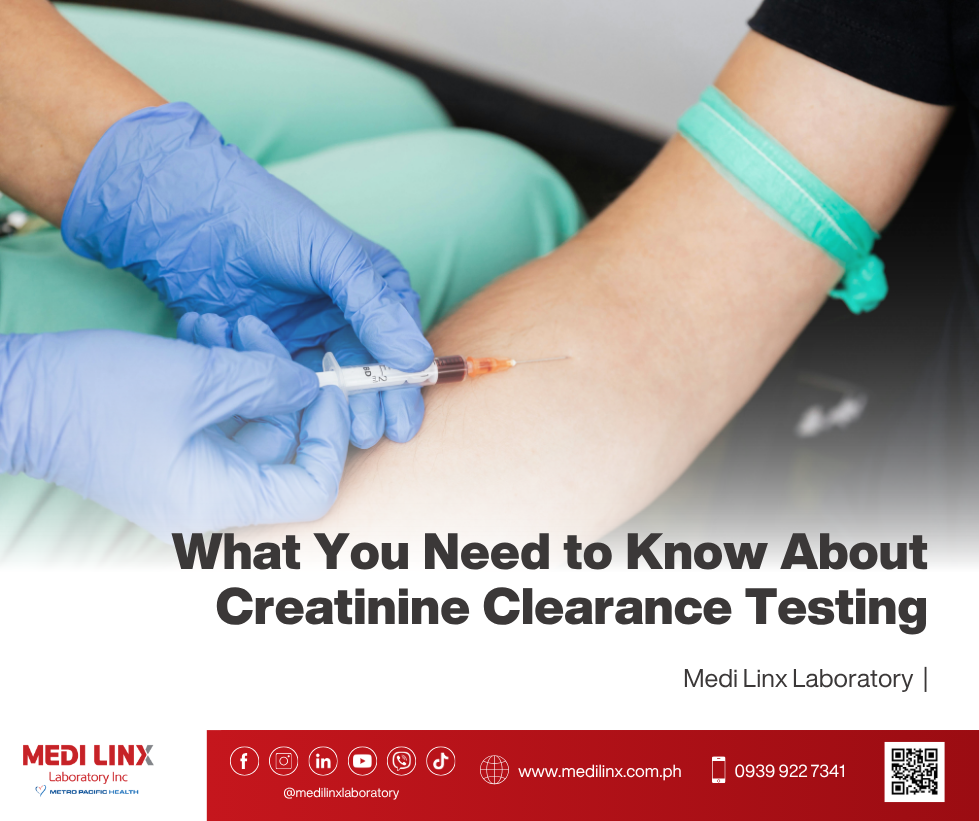
Creatinine Clearance is an indirect method used to assess the glomerular filtration functioning capabilities of the kidneys. It determines how efficiently the kidneys are clearing creatinine from the blood through combined urine and blood specimen analysis.
Designed for hospitals, clinics, and diagnostic centers, this test supports accurate renal evaluation and dependable patient monitoring through trusted send-out laboratory services.
This test may be recommended for:
Doctors use creatinine clearance testing to check how well the kidneys are filtering waste from the blood. The test helps detect kidney problems early and supports monitoring for patients with ongoing health conditions that may affect kidney function.
This test may be recommended for people who experience symptoms linked to kidney problems, including:
Creatinine clearance testing is also commonly included in routine health evaluations, especially for adults with higher health risks. Doctors may request the test for patients with conditions such as:
The test may also be used to monitor patients taking medications that can affect kidney function.
Creatinine clearance results help doctors understand how well the kidneys are filtering waste from the blood. Results may vary based on age, sex, overall health, muscle mass, and other medical conditions.
Creatinine clearance levels naturally decrease with age. Lower or abnormal results may suggest reduced kidney function or problems affecting blood flow to the kidneys. Doctors review the results together with symptoms, medical history, and other laboratory findings to better understand overall kidney health.
Expand your diagnostic capabilities through dependable send-out laboratory support designed for hospitals, clinics, and healthcare facilities.
Our laboratory partnership services provide access to:
How is creatinine clearance checked?
Creatinine clearance is checked using a blood sample and a urine sample. The test shows how well the kidneys remove waste from the blood. Patients may need to collect urine for 24 hours before getting a blood test. The results help doctors check kidney function.
What to eat the night before a creatinine test?
It is best to eat light and simple meals before a creatinine test. Avoid large amounts of red meat, alcohol, and protein supplements because they may affect the results. Drinking enough water may also help unless your doctor says otherwise.
What is a creatinine blood test/serum creatinine?
A creatinine clearance blood test measures how well the kidneys filter waste from the body. It checks creatinine levels in the blood and urine to help doctors evaluate kidney health and function.
Partner with Medi Linx, a trusted laboratory provider, for Creatinine Clearance testing and full send-out laboratory services. Our team is ready to help healthcare facilities with lab partnerships, referral testing, and reliable diagnostic support.
Schedule this test easily through the Medi Linx Virtual Lab or contact the Medi Linx QC Laboratory at 0939-9227341 for more information.

A reliable clinical solutions provider, Medi Linx Laboratory specializes in Hospital Laboratory Management (HLM), which grants hospitals and clinics direct...

Hospitals and clinics are given access to QUALITY laboratory services that are unavailable to them through our Send-Out Laboratory Service. Clinical Chemistry...

Specimen Transport Support Service is Medi Linx’s pick-up and transport of laboratory specimen where our partners are guaranteed with the highest quality and...
Contact Us!
"*" indicates required fields

At MEDI LINX LABORATORY INC., we are committed to safeguarding the privacy and security of your personal and health-related information. This data privacy statement outlines how we collect, use, disclose, and protect your data to ensure compliance with applicable laws and regulations, including but not limited to Republic Act No. 10173, its Implementing Rules and Regulations, and the issuance/s set forth by the National Privacy Commission (NPC).
Click here to read the Data Privacy Statement in full.