A reliable clinical solutions provider, Medi Linx Laboratory specializes in Hospital Laboratory Management (HLM), which grants hospitals and clinics direct...

PHP 1,500.00
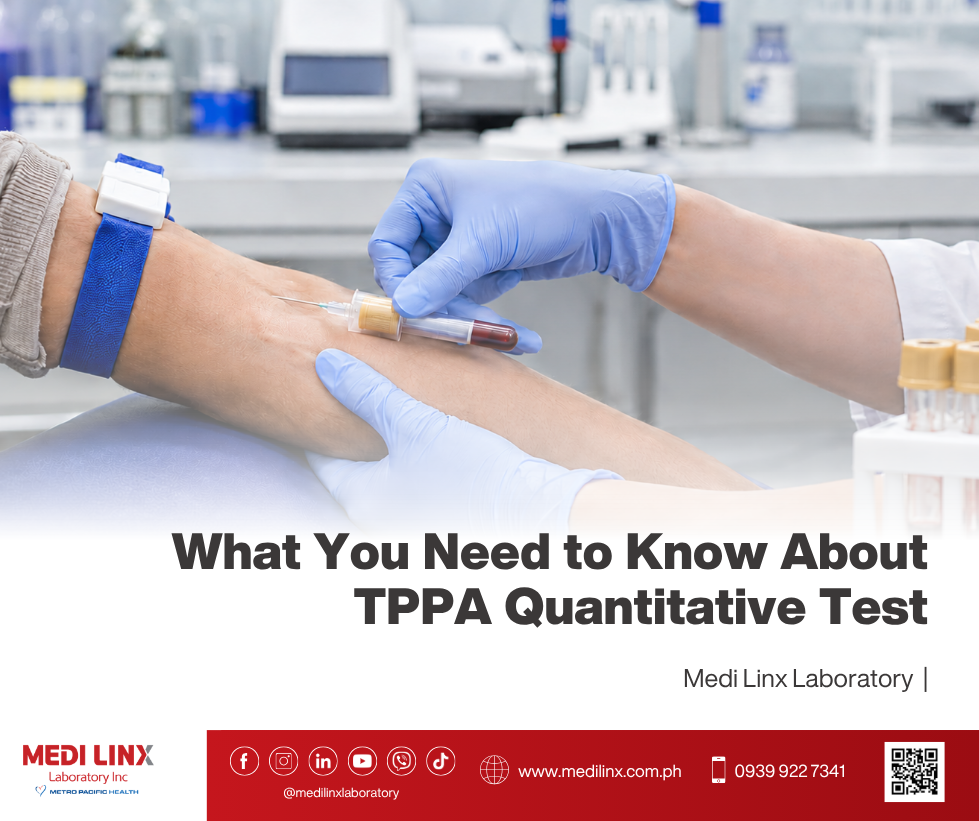
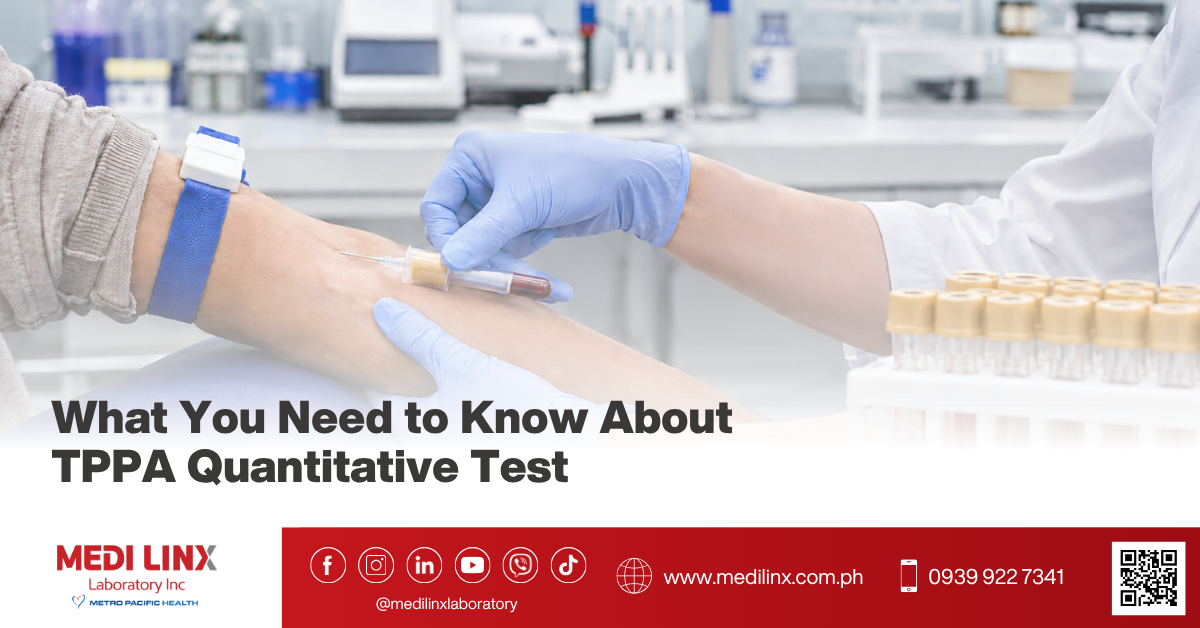
The Treponema pallidum Particle Agglutination (TPPA) Quantitative Test is a blood test used to detect and measure antibodies produced against Treponema pallidum, the bacterium that causes syphilis.
This test helps healthcare providers confirm exposure to syphilis and assess antibody levels in the blood. The results may be used together with other laboratory tests and clinical findings to help diagnose, evaluate, and monitor syphilis infection.
A TPPA Quantitative Test may be recommended for individuals who:
Syphilis can progress through different stages and may not always cause noticeable symptoms. Without diagnosis and treatment, the infection can lead to serious complications affecting multiple organs, including the brain, heart, and nervous system.
A TPPA Quantitative Test is important because it:
Early detection remains one of the most effective ways to prevent long-term health problems caused by syphilis.
A non-reactive result means that antibodies to Treponema pallidum were not detected in the blood sample.
This generally suggests that there is no evidence of syphilis infection. However, if exposure was recent, your healthcare provider may recommend repeat testing because antibodies may not yet be detectable.
A reactive result means that antibodies against Treponema pallidum were detected.
This may indicate:
Because TPPA antibodies can remain present for many years, additional tests and clinical evaluation are often needed to determine whether an infection is active or previously treated.
A positive TPPA result means that your blood contains antibodies against the bacterium that causes syphilis.
A positive result does not automatically indicate an active infection. It may reflect:
Your healthcare provider will interpret the result together with your medical history, symptoms, and additional laboratory tests to determine the appropriate next steps.
In many cases, yes.
After a person has been infected with syphilis, TPPA antibodies may remain detectable for life, even after successful treatment. For this reason, TPPA is generally not used alone to determine whether treatment has been successful or whether a new infection has occurred.
Healthcare providers may use other syphilis tests alongside TPPA to assess disease activity, monitor treatment response, or evaluate possible reinfection.
Medi Linx is your reliable diagnostic partner for accurate TPPA quantitative testing and comprehensive send-out services. Our professional laboratory team ensures precise antibody measurement to support your healthcare journey, while also offering seamless referral partnerships for local clinics.
Contact Medi Linx Laboratory in Quezon City at 0939-9227341 to schedule a test.

A reliable clinical solutions provider, Medi Linx Laboratory specializes in Hospital Laboratory Management (HLM), which grants hospitals and clinics direct...

Hospitals and clinics are given access to QUALITY laboratory services that are unavailable to them through our Send-Out Laboratory Service. Clinical Chemistry...

Specimen Transport Support Service is Medi Linx’s pick-up and transport of laboratory specimen where our partners are guaranteed with the highest quality and...
Contact Us!
"*" indicates required fields

At MEDI LINX LABORATORY INC., we are committed to safeguarding the privacy and security of your personal and health-related information. This data privacy statement outlines how we collect, use, disclose, and protect your data to ensure compliance with applicable laws and regulations, including but not limited to Republic Act No. 10173, its Implementing Rules and Regulations, and the issuance/s set forth by the National Privacy Commission (NPC).
Click here to read the Data Privacy Statement in full.